
Spout Pouch Leaking Problems: Why They
Happen and How to Prevent Them
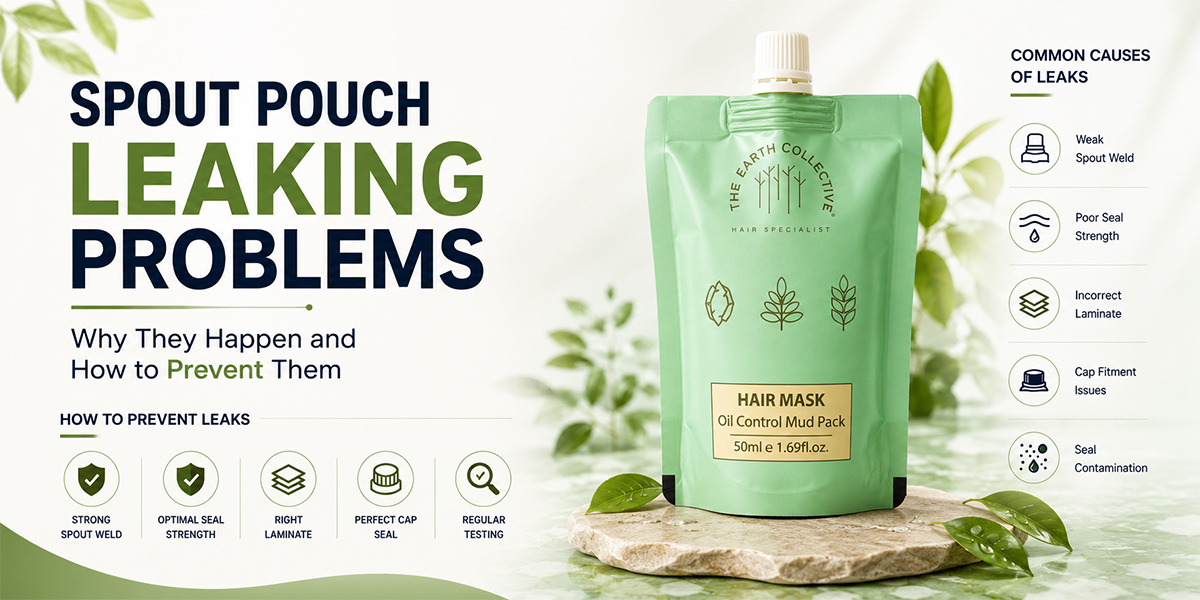
A leaking spout pouch can create much bigger problems than just product loss. It can lead to customer complaints, damaged shipments, product recalls, and unnecessary costs. In many cases, the pouch itself isn’t the problem. Leaks usually occur because the packaging wasn’t designed or tested correctly for the product and filling process.
The good news is that most spout pouch failures are preventable. By understanding the common causes, brands can make better packaging decisions before production begins.
1. Weak Spout Welding
The area where the spout is welded to the pouch is one of the most critical points in the entire package. If the weld is not strong enough, it may fail during filling, transportation, or repeated opening and closing by the consumer.
Poor welding can result from incorrect machine settings, inconsistent temperatures, or low-quality manufacturing.
A reliable packaging supplier should test weld strength regularly to ensure every pouch performs under normal handling conditions.
Tip: If your product is packed hot or transported over long distances, ask your supplier about the weld testing procedures used during production.
2. Contamination During Sealing
Even a small amount of product trapped in the sealing area can prevent the pouch from sealing properly.
This is especially common with thicker products such as sauces, honey, or liquid detergents, where splashes may occur during filling.
Keeping the sealing area clean and using the correct filling equipment helps reduce the risk
of weak or incomplete seals.
3. Using the Wrong Laminate
Not all liquid products require the same packaging structure.
For example, acidic beverages, edible oils, or products with a long shelf life may require higher barrier laminates than household cleaning liquids. Choosing an unsuitable material
can affect both the durability of the pouch and the protection of the product inside.
When selecting packaging, consider factors such as:
- Product viscosity
- Filling temperature
- Shelf-life requirements
- Storage conditions
- Transportation distance
Choosing the correct laminate from the start helps avoid expensive packaging failures later.
Related: Learn more about our Spout Pouches and available material options for different
liquid products.
4. Cap Leakage
The spout often gets the most attention, but the cap is just as important.
If the cap doesn’t fit correctly or isn’t tightened to the recommended torque, leakage can occur during shipping or after purchase.
Using high-quality caps with consistent manufacturing tolerances helps maintain a secure seal. For certain applications, tamper-evident closures can provide additional protection and consumer confidence.
5. Packaging Isn’t Tested Under Real Conditions
Some packaging performs well in the factory but fails once it enters the supply chain.
Pouches may be exposed to vibration during transport, stacking pressure in warehouses, temperature changes, or accidental drops. Without proper testing, these conditions can
reveal weaknesses that weren’t visible during production.
Many manufacturers carry out quality tests such as:
- Leak testing
- Seal strength testing
- Drop testing
- Burst testing
These tests help confirm that the pouch can withstand normal handling before it reaches
the customer.
Prevention Starts Before Production
Preventing leaks isn’t about solving problems after they happen. It’s about choosing the right packaging from the beginning.
Before approving a spout pouch, discuss the following with your packaging supplier:
- What product will be packed?
- Will it be hot-filled or retort processed?
- How long should the shelf life be?
- How will the product be transported and stored?
- Has the pouch been tested for your application?
The more information your supplier has, the better they can recommend a pouch that suits your product.
Final Thoughts
Most spout pouch leaking problems can be avoided with the right combination of material selection, strong sealing, quality welding, and proper testing.
Rather than focusing only on the cost of the pouch, it’s worth considering how the packaging will perform throughout production, transport, retail, and consumer use. Investing in the right specifications from the beginning can help reduce waste, protect your brand, and ensure your product reaches customers in perfect condition.
If you’re planning a new liquid packaging project, choosing a well-tested Spout Pouch designed for your product is one of the best ways to minimise packaging failures.
References
- ASTM International – Standards for Flexible Packaging
- Testing
- Flexible Packaging Association (FPA)
- PMMI – Packaging Machinery & Processing Industry Reports