
What Is a Retort Pouch? Everything You Need to Know
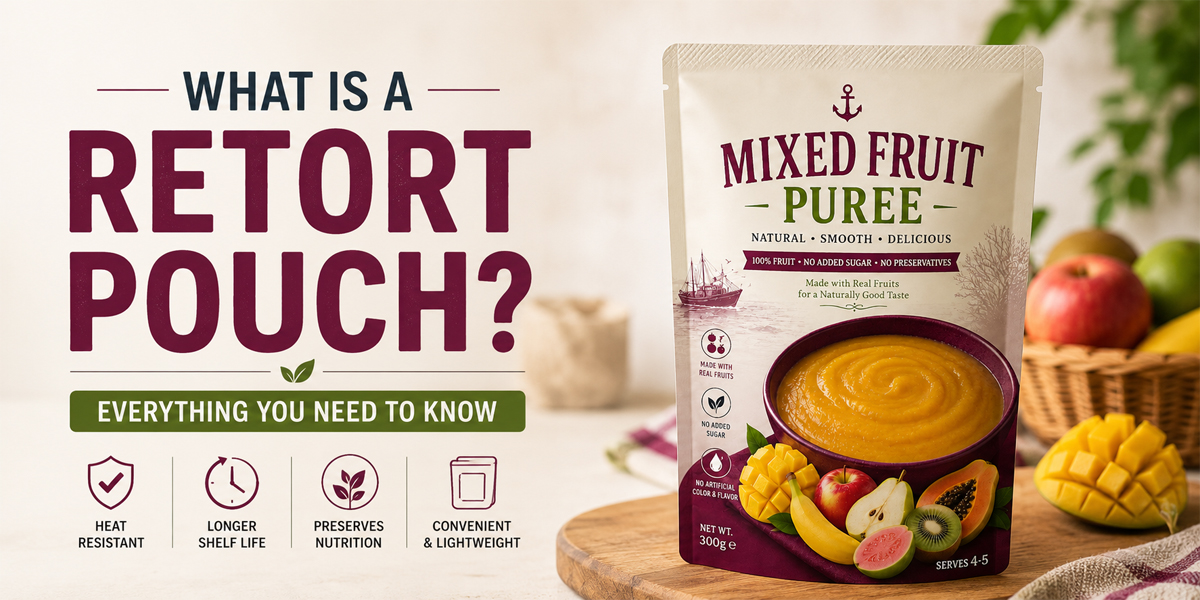
Walk into any supermarket today and you’ll notice more food products packed in flexible pouches than ever before. From ready-to-eat meals and soups to baby food and pet food, many brands are moving away from traditional cans and glass jars. One of the biggest reasons behind this shift is the retort pouch.
Although it looks similar to a regular stand-up pouch, a retort pouch is built for a completely different purpose.
More than just a flexible pouch
A retort pouch is specially designed to withstand commercial sterilisation. Once the product is filled and sealed, the pouch is processed at high temperatures under controlled pressure to eliminate harmful microorganisms. This allows many food products to achieve a long shelf life while maintaining their quality and safety.
Not every flexible pouch can tolerate this process. Retort packaging uses specially engineered laminate structures and heat-resistant adhesives that remain stable throughout sterilisation.
Why has it become so popular?
Consumers today want food that’s convenient, safe, and easy to store. At the same time, food manufacturers are looking for packaging that reduces transportation costs and improves production efficiency.
Retort pouches help meet both needs.
Because they’re lightweight and supplied flat, they require far less storage space than empty cans or glass containers. Once filled, they’re easier to transport, helping businesses optimise warehouse space and freight costs without compromising product protection.
For consumers, the benefits are equally practical. Retort pouches are lighter to carry, easier to open, and generate less packaging waste after use.
Related: Explore our Retort Pouches designed for high-temperature food packaging applications.
Where are retort pouches commonly used?
Retort packaging has become a trusted solution across the food industry. It’s widely used for products such as ready-to-eat meals, curry gravies, soups, sauces, seafood, cooked rice, baby food, and pet food. Any product that requires heat processing for extended shelf life is a potential application for retort packaging.
As demand for convenience foods continues to grow, retort pouches are becoming an increasingly common choice for both established brands and emerging food businesses.
Choosing the right material matters
A common mistake is assuming that every laminated pouch is suitable for retort processing.
The reality is that the packaging must be designed specifically for the temperatures and pressures used during sterilisation. Factors such as laminate structure, seal strength, and barrier performance all play an important role in protecting the product throughout its shelf life.
Selecting the right material at the beginning helps prevent packaging failures later.
Final Thoughts
Retort pouches have changed the way many food products are packaged. They combine the convenience of flexible packaging with the performance needed for commercial sterilisation, making them suitable for a wide range of shelf-stable food products.
If you’re planning to introduce a new heat-processed product, it’s worth discussing your filling process, sterilisation conditions, and shelf-life expectations with your packaging supplier before selecting the pouch structure. The right packaging choice can improve both product performance and long-term production efficiency.
🔗 Suggested Internal Links
References
- Flexible Packaging Association (FPA)
- PMMI – The Association for Packaging and Processing Technologies
- U.S. Food & Drug Administration (FDA) – Commercial Sterilization Guidance